• Skip to primary navigation
  • Skip to main content
  • Skip to primary sidebar
  • Skip to footer

Ag Risk Management and Crop Insurance

Crop Insurance

  • Home
  • Crop Insurance
    • Important Crop Insurance Dates For Oklahoma
    • Hemp Crop Insurance Program (HCIP) Facts
  • Livestock Risk Protection
  • Our Agent Team
  • Contact
    • Contact The Apache Office
    • Contact The Chickasha Office
  • About Us
    • Resources
      • Price Discovery Tool
      • RMA Rainfall Data
    • AgRM&I Basic Client Assessment

Eric Alexander

May 1, 2015 By Eric Alexander

Actual Production History Yield Exclusion Facts

The following article is reprinted with permission from a Risk Management Agency Fact Sheet.

To help you through what we think is the most important parts, here is an article on our take on Why Yield Exclusions Matter.

The RMA Article:

RMA has identified, in the actuarial documents, eligible crop years in which producers may elect to exclude actual yields from their actual production history. Crop years are eligible when the average per planted acreage yield for the county was at least 50 percent below the simple average for the previous 10 consecutive crop years. Separate determinations will be made for irrigated and non-irrigated acreage, when data is available.

RMA data is the primary data used to determine the average per planted acre yield for the county and the simple average for the previous 10 consecutive crop years, if sufficient RMA data exists. If RMA data is not sufficient for any given crop year, National Agriculture Statistics Service data is used, if available and appropriate, and then, in a limited number of situations, the applicable county transitional yield may be used, as appropriate, to complete a 10-year consecutive period.

A crop year that has been determined eligible for exclusion for a crop in a county will also be eligible for exclusion in contiguous counties, as identified in the actuarial documents.

Insurance Premiums

You may have a higher approved yield and insurance coverage when an actual yield is excluded from an actual production history database. If excluding a yield results in an increased approved yield, a higher insurance guarantee and greater indemnity payment could occur due to the yield exclusion. This requires an increase in the premium rate for Actual Production History Yield Exclusion to account for the increased risk of loss.

For example, a producer with a 65-percent coverage level may get a yield guarantee equivalent to a higher coverage level, such as 70 percent. The premium charged will reflect the higher effective coverage level (70 percent for this example), and higher risk of loss, because of the yield exclusion option. If you elect and use the yield exclusion option your premium will be adjusted while other producers will not be affected. For more information about the premium rating approach to yield exclusion go to RMA’s website at www.rma.usda.gov or one of your Ag Risk Management & Insurance Agents.

Eligible Insurance Plans and Crops

Beginning with the spring 2015 crop year, the actuarial documents identify eligible crop years that can be excluded. For the spring 2015 crop year, the Actual Production History Yield Exclusion Option is available for: 

  • Yield Protection Plan;
  • Revenue Protection Plan;
  • Revenue Protection with Harvest Price ExclusionPlan: and
  • Crops with a contract change date on or after November 30, 2014, which include corn, soybeans, cotton, grain sorghum, spring wheat, spring barley, spring canola, rice, sunflowers, peanuts, and popcorn.

The Actual Production History Yield Exclusion Option is not available in dual coverage counties with spring and fall insurance coverage for the 2015  crop year. The yield exclusion option will be available for spring and fall crops beginning with the 2016 crop year, as identified in the actuarial documents.

Producers who have either Catastrophic Risk Protection or buy-up insurance polices can use this program. Selecting an Option You must choose the Actual Production History Yield Exclusion Option by the sales closing date for your insurance policy. You choose the option by insurance policy, for a crop in a county. The option is continuous until you request that the coverage end. When you choose the option it will automatically exclude all eligible crop years from your actual production history database, unless you specifically opt out of the exclusion for a specific crop year (you wish to retain your yield for an eligible crop year in your actual production history database). You must opt out of the exclusion, by actual production history database, for any specific crop year(s) you wish to keep by the production reporting date for your crop in your county.

Yield Exclusion, Yield Adjustment, and Trend Adjustment

You may choose the Actual Production History Yield Exclusion Option and the Yield Adjustment Option and/or Trend Adjustment Option within an actual production history database. You can only apply one option, either yield exclusion or yield adjustment, to an actual yield for an eligible crop year within an actual production history database. When an actual yield in an eligible crop year is excluded, the excluded actual yield is not considered for trend adjustment.

Yield Exclusion and Less Than 4 Years of Actual Production History

If you choose to exclude an eligible crop year(s) and it lowers your actual production history to less than 4 crop years of production history in your actual production history database, the applicable transitional yield will be substituted for the excluded crop years to establish a minimum base period of 4 crop years.

Yield Limitations

Yield limitations that prohibit an actual production history-approved yield from decreasing more than 10 percent from one year to the next do not apply when yield exclusion applies to an actual production history database, or for the first crop year after you cancel the yield exclusion option.

wish to retain your yield for an eligible crop year in your actual production history database). You must opt out of the exclusion, by actual production history database, for any specific crop year(s) you wish to keep by the production reporting date for your crop in your county.

Written Agreements

Written agreements cannot be used to buy the Actual Production History Yield Exclusion Option:

  • For a county when the county does not contain the option in the actuarial documents;
  • When a written agreement is created to insure a crop in a county without actuarial documents for that crop; or
  • When a written agreement is created to insure an irrigation practice (irrigated, non-irrigated, or limited irrigation) in a county that does not contain that irrigation practice on the county actuarial documents.

This fact sheet gives only a general overview of the crop insurance program and is not a complete policy. For further information and an evaluation of your risk management needs, contact an Ag Risk Management & Insurance Agent.

(For more information of Yield Exclusions, visit our Yield Exclusion FAQs Page)

Source:

United States Department of Agriculture
A Risk Management Agency Fact Sheet
Actual Production History Yield Exclusion
December 2014
Risk Management Agency Actual Production History Yield Exclusion

Here is our take on what the Yield Exclusions can mean to you and your operation.

In other words,

Here is what Ag Risk has to say >>


Filed Under: What's Happening In Agriculture Today

January 30, 2015 By Eric Alexander

Apache Farmer’s Coop Readies New Risk Management Services For Roll Out

The following article appear in the Agriculture News Section of the Oklahoma Farm Report on Monday September 24, 2012:

Apache Farmers Co-op finance manager Davey Jones has been studying the agricultural finance landscape for a long time. What he’s learned over the years has allowed his co-op to create a bundle of risk-management tools and services they are preparing to offer their members. If they benefit the membership of the co-op, Jones says they may be coming to a co-op near you.

Radio Oklahoma Network’s Farm News Director, Ron Hays, recently spoke with Jones about the evolution of their risk management process and what it offers producers. Jones says the project has developed organically as the needs of producers has developed.

“It’s been a process as agriculture has changed and as, specifically, the input costs in agriculture have changed. It’s become a much riskier way of life. As we’ve watched that unfold, we’ve noticed that there are certain things that, looking backwards, if our producers had taken certain steps, then they really could have negated a lot of the negative consequences of these risks when they do play out to their disadvantage.

“So, we began to look at some things, as a co-op, that we might do, services we might provide that would help them plan ahead and manage those risks a little better.

“So, about two-and-a-half years ago, we began to kind of put together the pieces of the puzzle as droughts and price volatility of both inputs and the crops and livestock that we market became more erratic. As they became more erratic, it really seemed to pick up the pace of the need to make that come to fruition a little quicker. [Read more…] about Apache Farmer’s Coop Readies New Risk Management Services For Roll Out

Filed Under: In The News Tagged With: AgRM&I in the News

December 5, 2014 By Eric Alexander

Evaluating Crop Hail Insurance

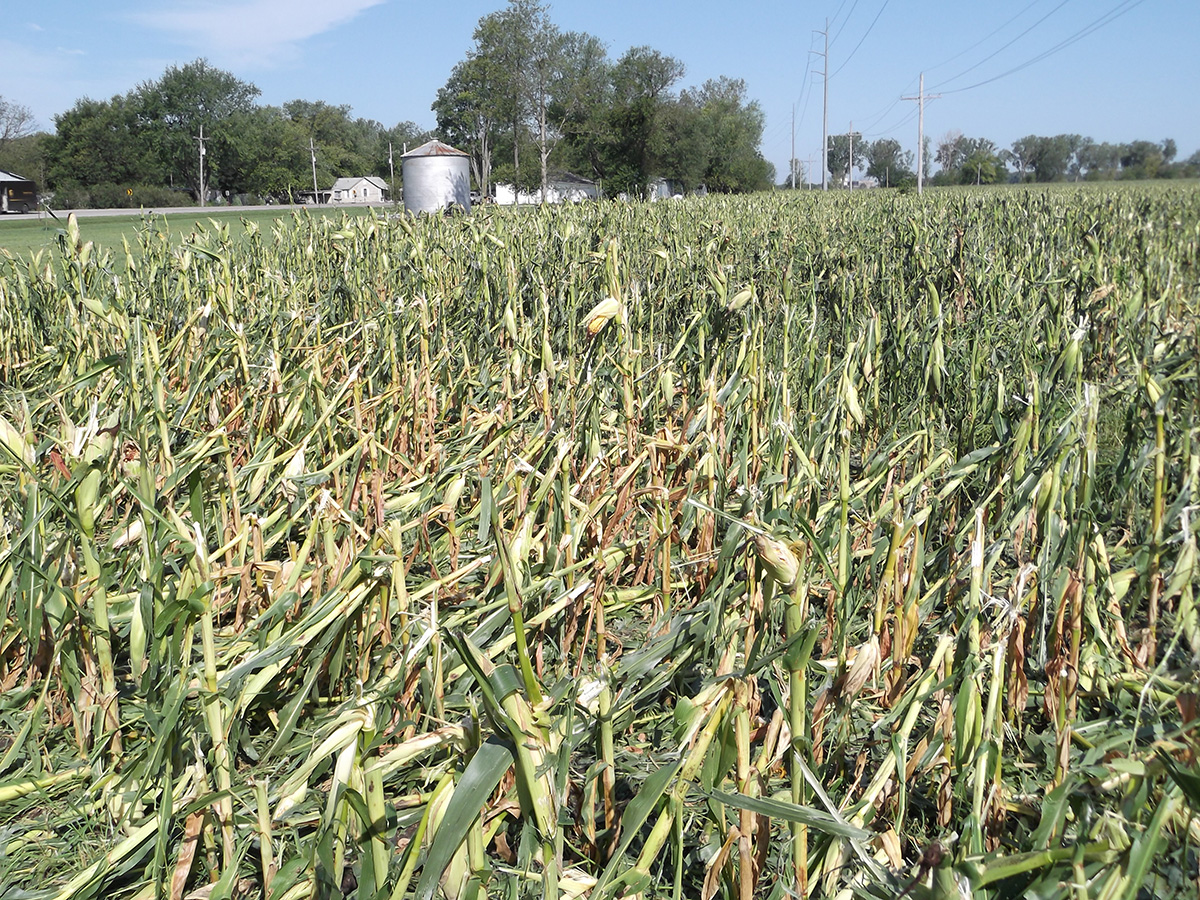
Hail Damaged Corn Crop makes it important in properly evaluating crop hail insurance.
Hail Damage Reminds Us To Properly Evaluate Crop Hail Insurance


Helping You In Evaluating Crop Hail Insurance Needs

Hail is the one catastrophe that is most likely to totally destroy a part of your crop and leave the rest looking fine. The part of the crop that hail takes out may well be less than the deductible of your Multiple Peril Crop Insurance policy.  It may also not lower your yield enough for a revenue insurance policy to kick in.

Crop-Hail  Insurance Fills The Gap

While Multiple Peril Crop Insurance policies protect you against losses severe enough to significantly drop the yield per insured unit, Crop-Hail  Insurance gives you acre-by-acre protection.  This protection  can be up to the actual cash value of the crop. If you buy 65/100 (65 percent of yield and 100 percent of  price) or greater for your MPCI, you can, under many policies, delete the hail coverage and replace it with private hail coverage. Many operators find it more effective to leave MPCI hail coverage in place and get a companion Crop-Hail policy to  cover their MPCI deductible.

Evaluating Crop Hail Insurance is especially important to those with  group policies which leave individuals exposed to spot losses due to hail. You can also buy additional Crop Hail Insurance coverage during the growing season (prior to damage) to protect added profit potential from bumper crop yields or higher-than-normal crop values.

Even if your frequency of hail damage is low, remember that Crop-Hail coverage is rated for your area. The premiums may be much smaller than you think.  And, unlike Multiple Peril Crop Insurance, Crop Hail Insurance can be purchased at any time during the growing season. It is an inexpensive way to protect against hail damage.

Crop Hail Insurance Overview

In short Crop Hail Insurance:

  • is a Private Coverage and not part of the Federal Program.
  • is usually an acre-by-acre coverage
  • does not require production reports
  • liability is expressed in a dollar amount, not a production guarantee.
  • the dollar amount insured per acre may not exceed the cash value of the crop
  • many plans allow coverage of specific acres within a county
  • coverage is rated for individual areas
  • losses are paid damage by the specified peril occurs to the crop

Adding Crop Hail Insurance to your Multiple Peril Insurance Coverage plan makes good financial sense with today’s very unpredictable patterns.  

Filed Under: Crop Insurance Tagged With: Crop Hail Insurance, Named Peril Insurance

December 5, 2014 By Eric Alexander

2014 Farm Act Is Here

A new farm law, the Agricultural Act of 2014 (2014 Farm Act), was signed on February 7, 2014, and will remain in force through 2018 and in the case of some provisions, beyond 2018. The 2014 Farm Act makes major changes in commodity programs, adds new crop insurance options, streamlines conservation programs, modifies some provisions of the Supplemental Nutrition Assistance Program (SNAP), and expands programs for specialty crops, organic farmers, bio-energy, rural development, and beginning farmers and ranchers.

The Congressional Budget Office (CBO) projects that 80 percent of outlays under the 2014 Farm Act will fund nutrition programs, 8 percent will fund crop insurance programs, 6 percent will fund conservation programs, 5 percent will fund commodity programs, and the remaining 1 percent will fund all other programs, including trade, credit, rural development, research and extension, forestry, energy, horticulture, and miscellaneous programs.

Filed Under: Farm Act

December 5, 2014 By Eric Alexander

Why Crop Insurance Matters

Hail Damaged Corn Shows Why Crop Insurance Matters at Ag Risk Management & Insurance of Apache Oklahoma image
Hail Damaged Corn Shows Why Crop Insurance Matters

We’ve all heard the term “Insurance Poor”.  Now there is crop insurance to consider.  Why can’t I just take my chances?  Tell me some reasons why crop insurance matters.

Here are some very good reasons Why Crop Insurance Matters:

Economic Security

We all want healthy, fresh food for our families. America’s farmers and ranchers provide that and more. You provide that for your own family and families all over the world. Crop insurance provides the access to capital and security farmers need to increase crop yields, improve operating efficiencies and stay competitive in world markets. A financially healthy farm economy is essential to the stability of America’s economy.  If you fail, we all fail.

American Made Materials

Farmers and ranchers don’t just grow food; they grow the plants that provide the fiber for our softest cotton baby blankets, big cozy sweat shirts for Friday Night Football, beautiful wedding gowns, and all the other things that make life great.  The feed for livestock comes from you.  All that you do provides the raw materials for hundreds of essential products.  You help reduce our national dependency on foreign manufacturing.  Crop insurance helps you to stay financially solid and in the game.

Assurance Through Insurance

In 2012, the crop insurance program paid out more than $17 billion in indemnities to producers across the U.S. who purchased crop insurance. Crop insurance provides a safety net against perils such as frost, drought, flooding and hail. Without a strong crop insurance program, uncontrollable changes in weather could undermine the financial security of individual farmers and place the entire farm economy in jeopardy.  Again if you fail we all may fail.

Ensuring Affordability

Every day we all depend on the goods and products made by America’s farmers and ranchers. America’s farmers and ranchers, in turn, depend on crop insurance as an essential business tool in today’s difficult agricultural economy. In an increasingly volatile business environment, crop insurance provides an important measure of stability for America’s agricultural producers. Access to affordable crop insurance allows American farmers to continue to provide affordable food for America and the world.

But, you probably knew all these things, and just need to be reminded now and then.  Crop Insurance Matters!

Filed Under: Crop Insurance

December 5, 2014 By Eric Alexander

Multiple Peril Crop Insurance

Multiple Peril Crop Insurance (MPCI)

Some Short Facts

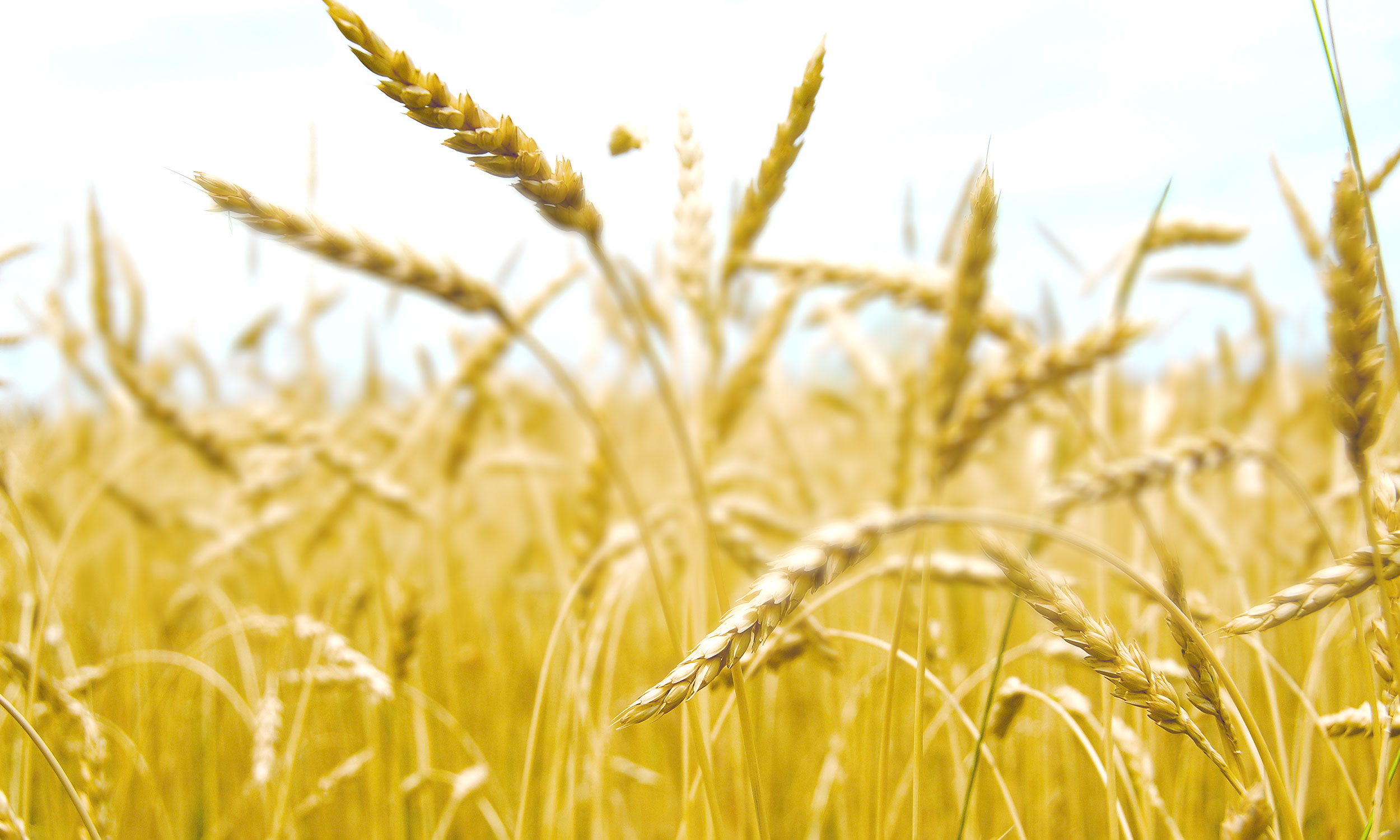
wheat-field2500x1500-blurMultiple Peril Crop Insurance (MPCI) policies must be purchased before you plant. They cover loss of crop yields from all types of natural causes including drought, excessive moisture, freeze, and disease. Newer coverage options combine yield protection and price protection to guard farmers against potential loss in revenue.  That way is doesn’t matter whether it is due to low yields or changes in market price.

Under the Federal Crop Insurance Program’s unique public-private partnership, there are currently 19 private companies authorized by the United States Department of Agriculture Risk Management Agency (USDA RMA) to write MPCI policies. The service delivery side of the program, such as:

  • writing and re-insuring the policies
  • marketing
  • adjusting and processing claims
  • training
  • record-keeping, etc.

is handled by each private company.

The Risk Management Agency (RMA) oversees and regulates the program. The RMA sets the rates that can be charged and determines which crops can be insured in different parts of the country. The private companies are obligated to sell insurance to every eligible farmer who requests it The private companies also retain a large portion of the risk on over 80 percent of the policies written.

The federal government also subsidizes the farmer-paid premiums to reduce the cost that is paid by farmers. In addition, it reimburses the private insurance companies to offset operating and administrative costs that would otherwise be paid by farmers as part of their premium. Through this federal support, crop insurance remains affordable to a majority of America’s farmers and ranchers.

By combining the regulatory authority and financial support of the federal government with the efficiencies of the private sector, the crop insurance program has succeeded in meeting and even surpassing the goals set forth by Congress for broad participation, diversity and inclusion. By using the private sector, risk is shared among the private companies as well as the government.

Filed Under: Crop Insurance Tagged With: multiple peril crop insurance

Primary Sidebar

Search Ag Risk

Recent Posts

  • USDA Issues Hemp Crop Insurance
  • Check for Yield or Revenue Losses
  • Prevented Planting Claims
  • Hemp! Proceed With Caution
  • It’s A Risky Business
  • Home
  • Crop Insurance
    • Important Crop Insurance Dates For Oklahoma
    • Hemp Crop Insurance Program (HCIP) Facts
  • Livestock Risk Protection
  • Our Agent Team
  • Contact
    • Contact The Apache Office
    • Contact The Chickasha Office
  • About Us
    • Resources
      • Price Discovery Tool
      • RMA Rainfall Data
    • AgRM&I Basic Client Assessment

Footer

Policy Pages

  • Privacy Policy
  • Site Security
  • Non-Discrimination Statement
  • DMCA

Resources

  • Rainfall Data
  • RMA Price Discovery
  • Key Crop Insurance Dates
  • Crop Insurance Acronyms
Copyright © 2026 Ag Risk Management & Insurance, LLC. All rights reserved. Site Design By Striped Ape Digital Media Return to top · Log in
This website uses cookies to improve your experience. We'll assume you're ok with this, but you can opt-out if you wish.AcceptReject Read More
Privacy & Cookies Policy

Privacy Overview

This website uses cookies to improve your experience while you navigate through the website. Out of these, the cookies that are categorized as necessary are stored on your browser as they are essential for the working of basic functionalities of the website. We also use third-party cookies that help us analyze and understand how you use this website. These cookies will be stored in your browser only with your consent. You also have the option to opt-out of these cookies. But opting out of some of these cookies may affect your browsing experience.
Necessary
Always Enabled
Necessary cookies are absolutely essential for the website to function properly. This category only includes cookies that ensures basic functionalities and security features of the website. These cookies do not store any personal information.
Non-necessary
Any cookies that may not be particularly necessary for the website to function and is used specifically to collect user personal data via analytics, ads, other embedded contents are termed as non-necessary cookies. It is mandatory to procure user consent prior to running these cookies on your website.
SAVE & ACCEPT